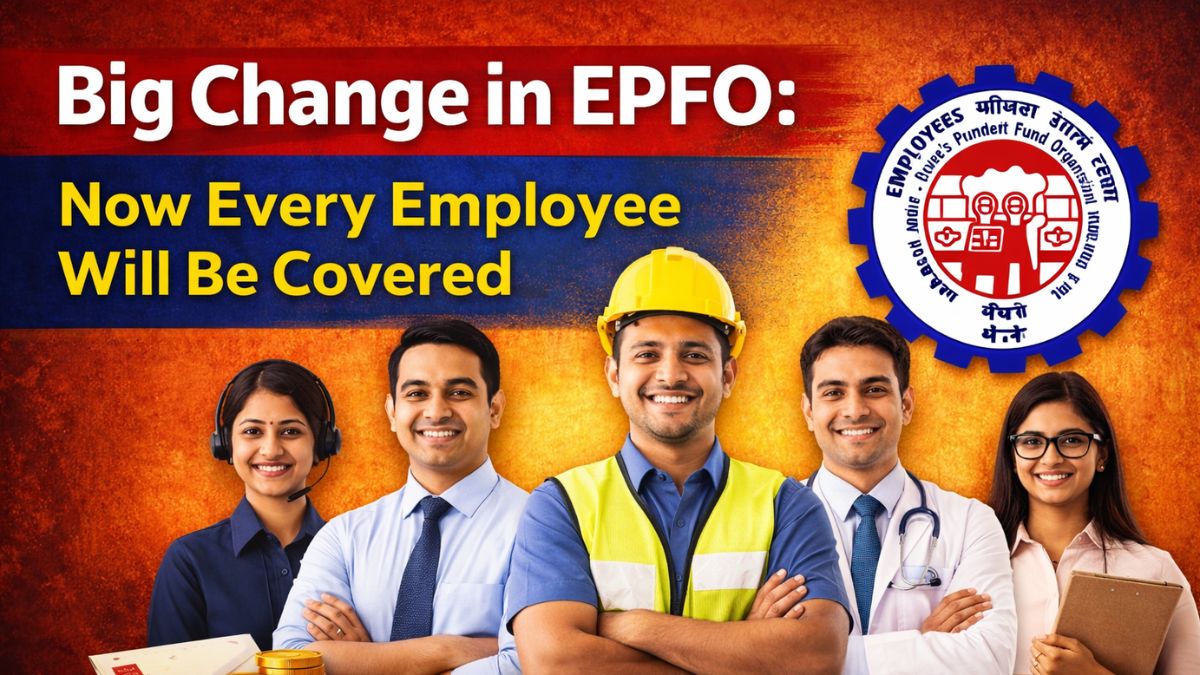
Big Change in EPFO – India’s retirement security landscape is undergoing a transformative shift, and at the heart of this change is the Employees’ Provident Fund Organisation — better known as EPFO. The organisation has rolled out a sweeping set of reforms aimed at making its pension umbrella wider, fairer, and more accessible than ever before. For decades, a significant number of workers in the organised sector were left out of the pension net due to rigid eligibility conditions, and the government has now taken decisive steps to close those gaps.
Understanding the Problem That Needed Fixing
The Employees’ Pension Scheme, commonly referred to as EPS-95, had long been a subject of debate and dissatisfaction among workers and labour unions alike. The core issue was straightforward yet deeply impactful — a large proportion of eligible employees were unable to avail pension benefits because of complex conditions attached to the scheme. Factors such as salary caps, mandatory service duration requirements, and complications arising from frequent job changes had effectively excluded a sizeable portion of the workforce from receiving retirement income.
Workers who earned modest wages or those who had switched employers multiple times were among the most affected. Their pension contributions often got disrupted mid-way, preventing them from completing the minimum service period required to qualify. The result was a system that was theoretically inclusive but practically exclusionary — leaving behind the very people who needed financial security the most during their retirement years.

What the New Reforms Actually Change
The revised EPFO pension framework introduces several significant modifications designed to dismantle the barriers that previously kept workers out of the system. The most notable change is that every EPF member will now be automatically enrolled into the pension scheme without any additional conditions or separate application process. This seemingly simple shift carries enormous implications for the millions of workers who were either unaware of their eligibility or unable to complete the formalities.
Another critical reform addresses the continuity of pension contributions when an employee changes jobs. Under the old system, switching employers would often break the chain of contributions, effectively resetting the service clock. The updated rules ensure that pension contributions remain continuous and cumulative regardless of how many times a worker moves between companies. Employers, too, will carry a greater responsibility — they will be legally obligated to ensure that every employee’s pension contribution is deposited accurately and on time.
Direct Benefits for Employees Across All Income Levels
The most tangible benefit of these reforms will be felt by workers after they retire. With a more inclusive pension structure in place, a guaranteed monthly income during old age becomes a realistic prospect for far more people than before. In a country where inflation steadily erodes the value of savings, having a structured pension payment can be the difference between a dignified retirement and a financially precarious one.

For low-wage earners specifically, this reform could be life-changing. These individuals rarely have the means to build significant savings through private investments or alternate income streams. For them, a monthly pension may represent their sole source of regular income post-retirement. By bringing more workers under the EPS umbrella, the government is essentially extending a social safety net to a segment of the population that has historically been overlooked by formal financial systems.
Beyond individual benefit, this expansion of pension coverage is expected to deepen public trust in institutional retirement planning. When workers can see their contributions translating into tangible future benefits, they are far more likely to embrace long-term financial discipline. This could also reduce the burden on families and communities who would otherwise have to financially support elderly members who receive no pension income.
What This Means for Employers and Businesses
The reforms do not affect employees alone — businesses and employers will also need to adapt to the new compliance requirements. Every company will now be required to ensure that all their employees, without exception, are enrolled in the pension scheme. This means reviewing existing payroll systems, updating HR policies, and maintaining accurate contribution records to avoid any lapses.

While this may initially require some administrative adjustment, the long-term benefits for companies are significant. Employees who feel financially secure about their future tend to be more engaged, loyal, and productive at work. A robust pension framework can serve as a compelling retention tool, reducing turnover and attracting skilled workers who value comprehensive employment benefits. In this sense, the EPFO reforms have the potential to create a more motivated and stable workforce across India’s organised sector.
The Road Ahead: What Future Reforms Could Look Like
The government’s ambitions for EPFO reform do not stop here. Policymakers and labour experts have indicated that future changes could include greater flexibility in contribution amounts, the introduction of voluntary top-up options, and potential increases in the minimum pension amount. All of these would further strengthen the financial position of retirees and make the EPS scheme even more competitive with private pension alternatives.
Digital infrastructure is also expected to play a major role in the next phase of reforms. Improved technology platforms could allow workers to track their pension accounts in real time, giving them complete transparency over their accumulated benefits. Enhanced digital accessibility would also streamline the claims process, reducing bureaucratic delays and ensuring that retirees receive their payments promptly and without unnecessary complications.

What Employees Should Do Right Now
The success of these reforms ultimately depends on workers taking proactive steps to ensure they are positioned to benefit. The first and most important action is to activate and update your Universal Account Number, or UAN, on the EPFO member portal. Your UAN is the single identifier that links all your employment and contribution records across different jobs and companies.
It is equally essential to link your Aadhaar card and bank account to your UAN without delay. Any mismatch or missing information in these records can result in delays or disruptions in pension payments later. Workers should also verify with their current employer that pension contributions are being deposited on a regular basis and that all details on file are accurate and current. Visiting the official EPFO website at epfindia.gov.in or using the UMANG app are the most reliable ways to check your pension status and contribution history at any time.
A Stronger Foundation for India’s Retirement Future
The EPFO pension reforms represent one of the most meaningful steps taken in recent memory toward building a comprehensive social security system in India. By ensuring that every contributing EPF member can access pension benefits, the government is laying a foundation that will support workers for generations to come. The shift away from exclusion toward universal coverage signals a mature and compassionate approach to workforce welfare.

As these changes take root, millions of workers who previously had no retirement income to look forward to will now have a structured and reliable safety net waiting for them. This is not merely a policy update — it is a fundamental reorientation of how India values the long-term wellbeing of its working population. For anyone currently employed in the organised sector, now is the time to act, stay informed, and make the most of these historic changes.