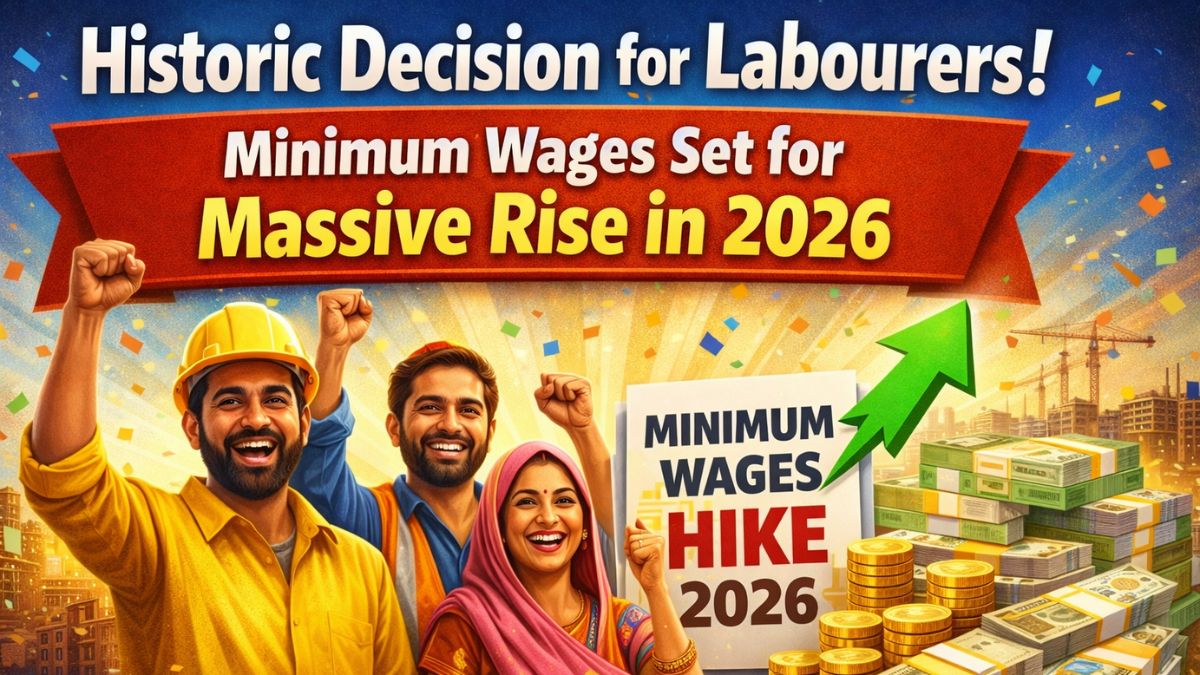
Labour Minimum Wages Hike – Millions of workers across India may soon have reason to celebrate, as reports indicate that the government is preparing to implement a substantial revision in minimum wage rates under the Labour Minimum Wages Hike 2026 initiative. The proposed changes are aimed at improving the earnings and overall living standards of the country’s vast labour force.
How Big Could the Increase Be?
According to emerging reports, wage rates in certain sectors could rise by as much as 250%, marking one of the most significant upward revisions in recent memory. The move is seen as a direct response to rising inflation and the growing cost of daily living, ensuring that workers receive compensation that reflects current economic realities.
Which Workers Stand to Benefit?
The wage revision is primarily targeted at those employed at minimum wage levels, particularly in sectors that have historically struggled with low pay. Workers likely to see the most impact include:

- Construction and infrastructure labourers
- Factory and industrial workers
- Agricultural and farm workers
- Domestic workers and those in the unorganised sector
What Will This Mean for Workers’ Lives?
A meaningful increase in minimum wages is expected to bring several positive changes for workers and their families:
- Higher monthly income, providing greater financial stability
- Improved quality of life and access to basic necessities
- Easier fulfilment of household needs, reducing financial stress
- Opportunity to save, building a financial safety net for the future
Overall, this revision is expected to significantly strengthen the economic position of the working class.
When Could the New Rates Take Effect?
Media reports suggest that the revised wage structure could come into force sometime in 2026. Both central and state governments are expected to play a role in implementation, with state governments applying the revised rates based on their own economic conditions. The changes will officially take effect only after a formal government notification is issued.

How Are Minimum Wages Determined?
Minimum wage rates in India are not fixed arbitrarily — they are calculated based on several key factors:
- Inflation rate and purchasing power
- Cost of living in different regions
- Nature of work and skill level required
- Economic conditions of the respective state
Both the central and state governments work together to arrive at wage figures that balance worker welfare with economic feasibility.
Frequently Asked Questions

Q: How much of a wage hike is expected? A: Some reports suggest increases of up to 250% in certain categories.
Q: Who will benefit from this revision? A: All categories of workers currently earning at or near the minimum wage level.
Q: When will the new rules be enforced? A: Implementation is anticipated in 2026, subject to official notification.

Q: Who decides minimum wages in India? A: Both the central and state governments jointly determine minimum wage rates.
Disclaimer: This article is based on media reports and preliminary updates. The final wage rates and implementation details will be confirmed only through an official government notification. Readers are advised to verify information through the official Labour Ministry portal at labour.gov.in before drawing conclusions.